
The Psychology of Cartoon Sidekicks (Part 5)
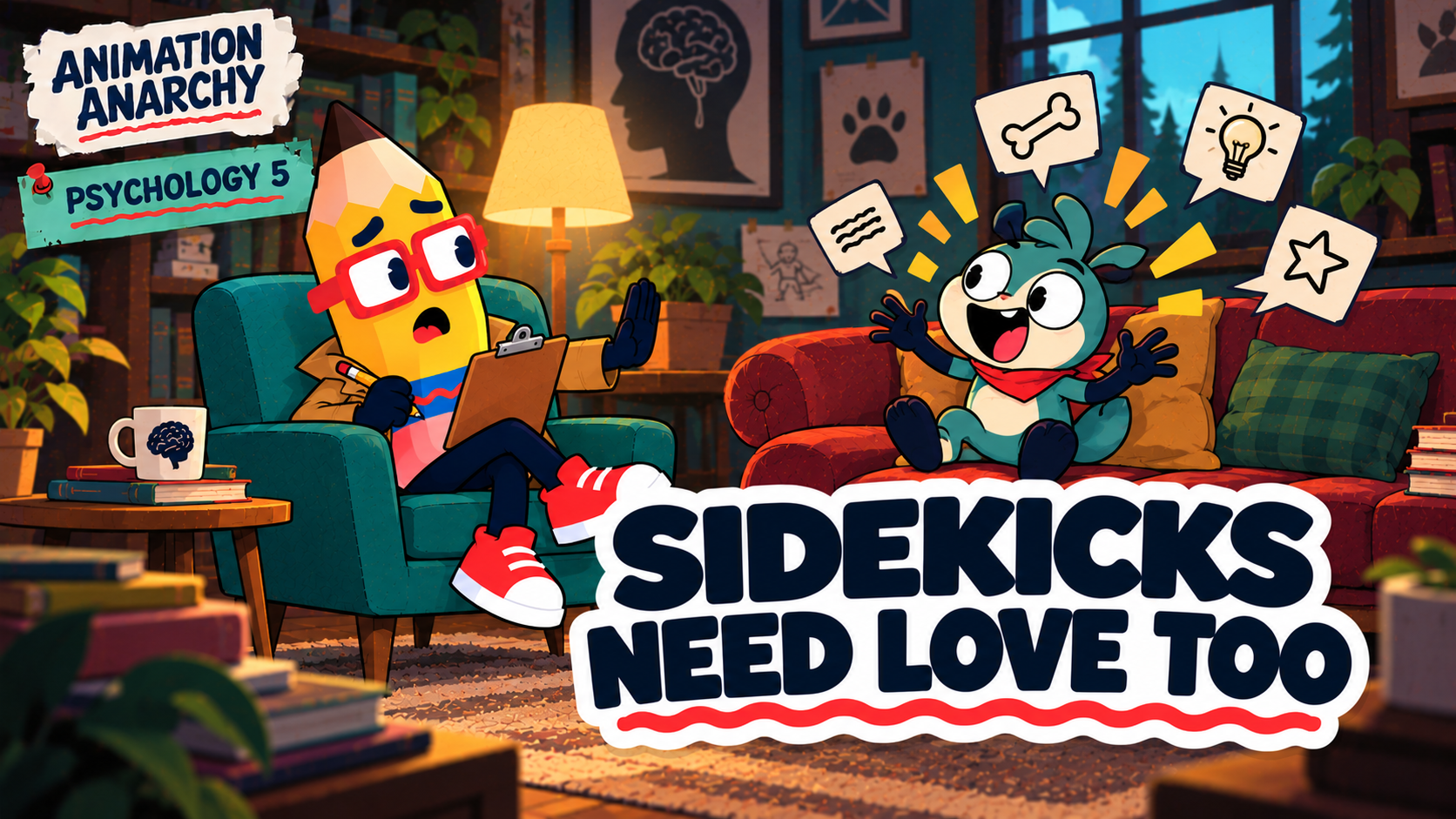
The Psychology of Animated Characters, Part 5
Every hero needs a sidekick. Some sidekicks are secret geniuses. Some are pure comic relief. Some exist mostly to sell plush toys. And some are the most loyal friends in all of fiction.
Here's the psychology: researchers Sheldon Cohen and Thomas Wills described the buffering effect of social support. Having someone in your corner protects you from stress. The hero takes the hits, and the sidekick is the cushion. In storytelling terms, the sidekick is also the foil: a character whose differences make the hero's qualities stand out.
Type 1: The sidekick who's smarter than the hero
Examples: the Brain, Jiminy Cricket, Iago.
The Brain would have taken over the world many times if Pinky would just stay focused. Jiminy Cricket had one job, be Pinocchio's conscience, and Pinocchio wandered off within minutes. Iago eventually figured out his boss was going nowhere and switched sides.
The lesson: Smart sidekicks show the hero's blind spots. That's the foil at work.
Type 2: The sidekick with no idea what's going on
Examples: Pinky, Patrick Star, Kronk.
These characters are wonderfully clueless and somehow always land on their feet. Kronk might be the best example in animation history. He was supposed to be the villain's muscle in The Emperor's New Groove, and he ended up as one of the most beloved characters in the movie, mostly for his cooking, his conscience and his squirrel conversations.
The lesson: A clueless sidekick lowers the tension so the audience can breathe. Comedy is a buffer too.
Type 3: The sidekick who stole the franchise
Examples: Scrat, Puss in Boots, Timon and Pumbaa.
Scrat chases one acorn across an entire film series and gets more laughs than most of the cast. Puss in Boots was a supporting character in Shrek 2 and ended up with his own movies. Timon and Pumbaa got a TV show and a whole retelling of The Lion King from their point of view.
The joke: These characters have fewer responsibilities than the hero and more merchandise. Living the dream.
Type 4: The ride-or-die friend
Examples: Mushu, Appa, Donkey.
Mushu gets demoted from guardian to gong-ringer, and he still risks everything for Mulan. Appa is Aang's ride, his home and his oldest friend. Donkey won't leave Shrek alone, which turns out to be exactly what Shrek needed.
The lesson: This is the buffering effect in its purest form. These sidekicks don't fix the hero's problems. They make sure the hero never faces them alone.
The big lesson: be somebody's sidekick
Heroes get the posters. Sidekicks get the job done. The research on social support says the same thing every great sidekick shows us: one loyal friend can change everything.
Your turn
Who's your all-time favorite sidekick? Tell me in the comments. Part 6 is about henchmen who became villains.
New episodes drop on YouTube first. Subscribe to Mr. Bray Labs so you never miss one.
