
The Psychology of Cartoon Anti-Villains (Part 4)
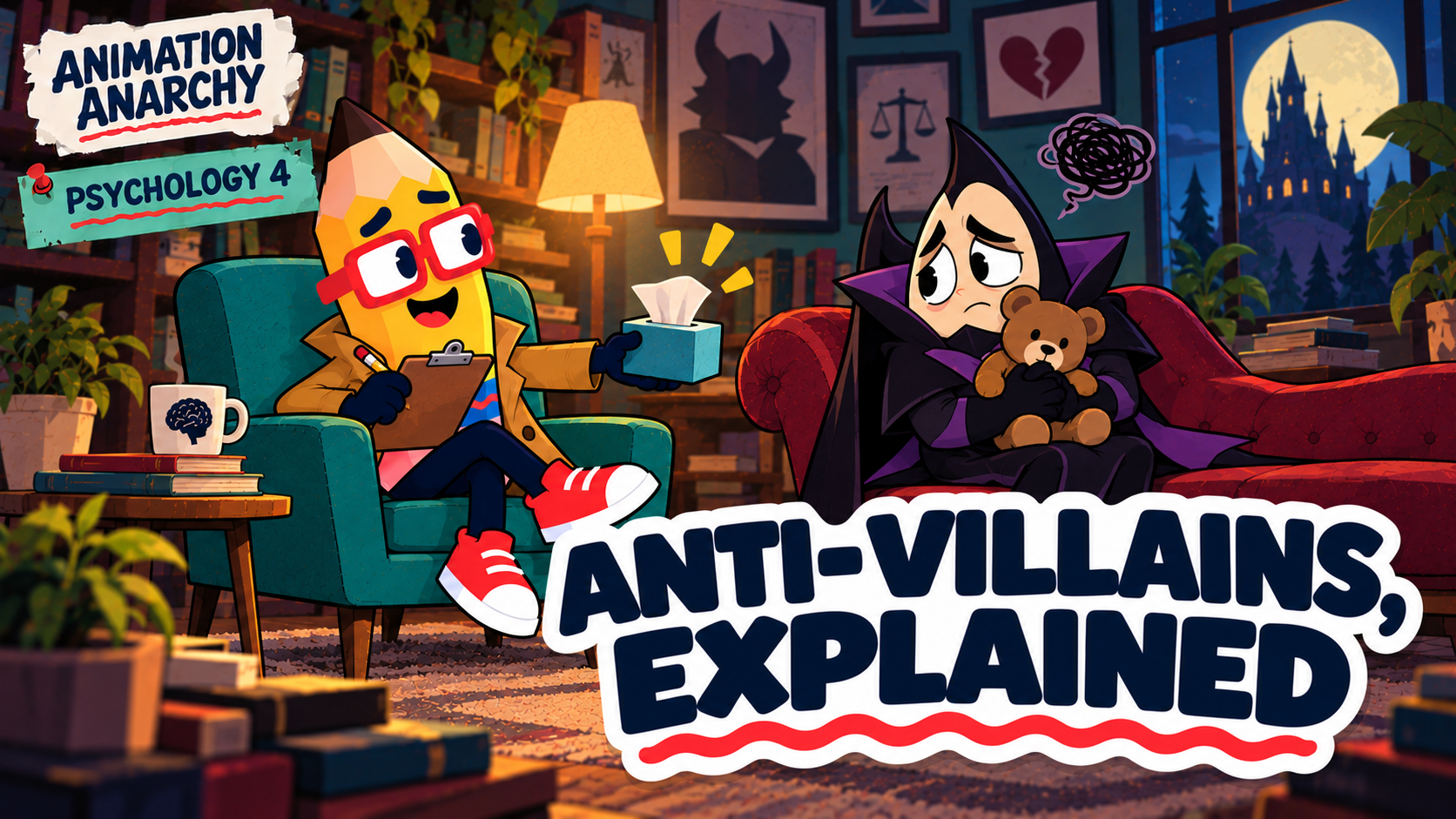
The Psychology of Animated Characters, Part 4
Some villains cackle. Anti-villains don't. Anti-villains make an argument, and the scary part is that sometimes it's a good one. They want something reasonable and go about it in the worst possible way.
Two ideas from psychology help explain them.
Cognitive dissonance (Leon Festinger, 1957): when your actions and your beliefs don't match, it feels terrible, so you change your beliefs to fit your actions. Anti-villains keep raising the stakes and telling themselves it's still justified.
The fundamental attribution error (Lee Ross, 1977): we tend to blame people's character for their behavior and ignore their situation. Anti-villain stories flip that. They show us the situation, and suddenly the villain makes sense.
Type 1: "Maybe they had a point"
Examples: Magneto, Lord Shen.
Magneto wants mutants to be safe from people who fear them. After what he has lived through, that's understandable. His methods are where it falls apart.
Lord Shen, in Kung Fu Panda 2, was sent away by his parents after a prophecy. Everything he does after that is a desperate attempt to prove the prophecy wrong, which is how he makes it come true.
The joke: Both of these guys could have solved things with a strongly worded letter. Neither has ever written one.
Type 2: "I'm the main character, actually"
Examples: Prince Zuko (early on), Doctor Octopus, Eris.
These characters genuinely believe they're the hero of the story. Zuko thinks capturing the Avatar is the honorable thing to do. Doc Ock thinks his science is too important to stop. Eris, the goddess of discord in Sinbad: Legend of the Seven Seas, just thinks chaos is fun, and she's not wrong that it's fun to watch.
The lesson: Everyone is the main character in their own head. Good stories remember that about the "bad guys" too.
Type 3: "I'd be fine if you'd leave me alone"
Examples: Plankton, Dr. Doofenshmirtz, King Andrias.
This is the fundamental attribution error in action. We meet Plankton as a tiny schemer and assume he's just bad. Then the show tells us he and Mr. Krabs used to be best friends. Doofenshmirtz gets a running gag of tragic backstory flashbacks that explain every evil scheme. King Andrias in Amphibia turns out to be acting out of loneliness and loyalty to something he's been taught.
The joke: Doofenshmirtz would be so much happier running a bakery. The "-inator" pastry line writes itself.
The big lesson: understanding isn't excusing
Anti-villains teach a skill most of us need: understanding why someone does something without agreeing that it's okay. You can see Magneto's pain and still say his plan is wrong. That's not being soft. That's being wise.
Your turn
Which anti-villain do you think was right, at least a little? Tell me in the comments. Part 5 celebrates the sidekicks.
New episodes drop on YouTube first. Subscribe to Mr. Bray Labs so you never miss one.
