
The Psychology of Cartoon Henchmen (Part 6)
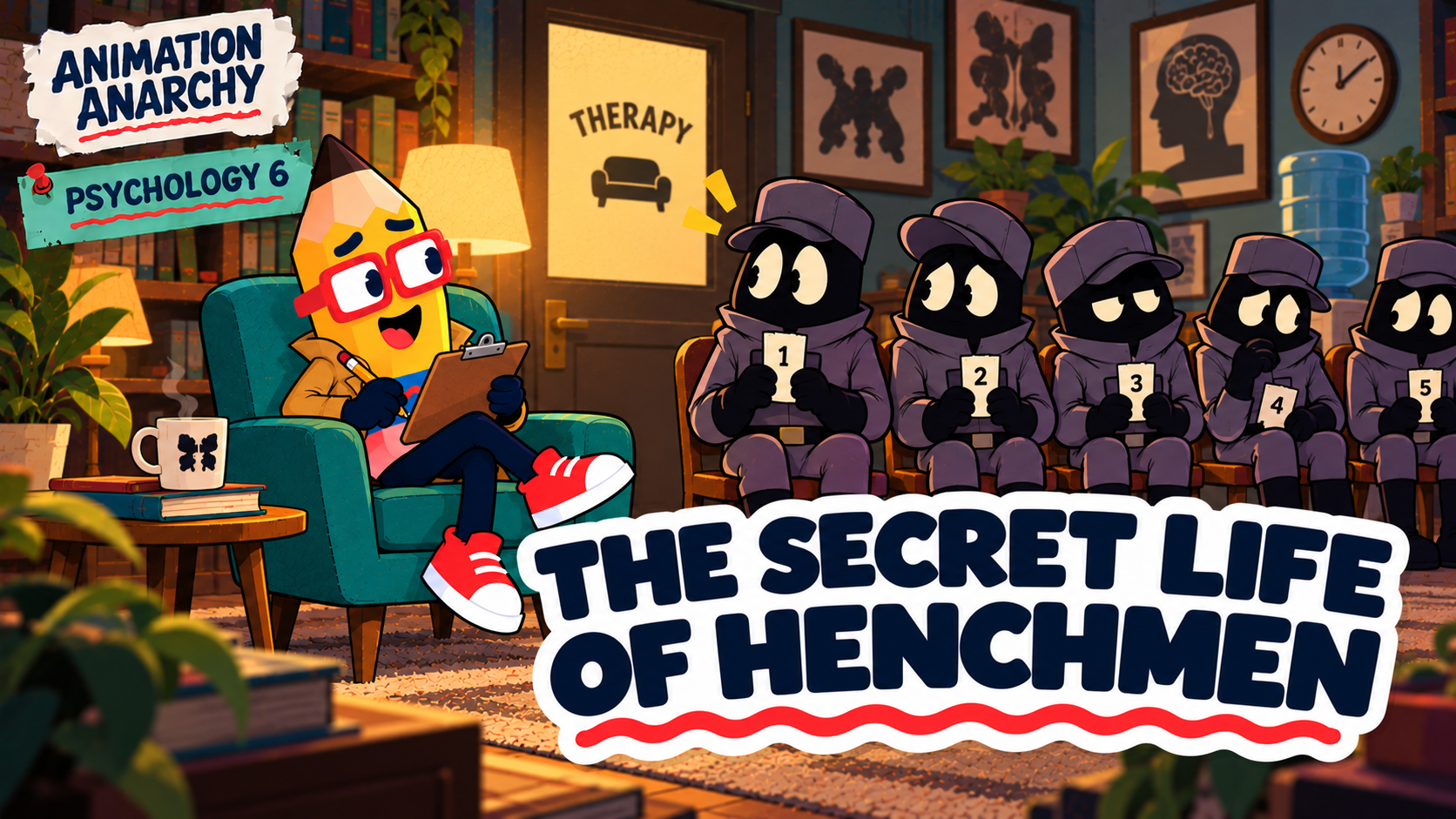
The Psychology of Animated Characters, Part 6
Henchmen have the worst job in animation. Long hours, no thanks, a boss who yells, and a hero who knocks you into a lake every Saturday morning. And yet they keep showing up.
Why? Psychology has two answers.
Obedience to authority. In the 1960s, psychologist Stanley Milgram ran famous experiments showing that ordinary people will follow instructions from an authority figure much further than they expect to. Henchmen are Milgram's lesson in costume.
Self-determination theory. Psychologists Edward Deci and Richard Ryan found that people need three things to feel motivated: autonomy (some control), competence (feeling good at something) and relatedness (feeling connected). Henchmen get none of the three. No wonder they're grumpy.
Type 1: Just here for the paycheck
Examples: Team Rocket, Shenzi, Banzai and Ed.
Jessie, James and Meowth have failed to catch Pikachu for more than twenty years, and they show up every time with a fresh motto and matching outfits. The hyenas in The Lion King work for Scar because he promised them food. He doesn't deliver. They notice.
The joke: Team Rocket is the most consistent team in animation. Consistently unsuccessful, but consistent.
Type 2: Wrong career, too invested to leave
Examples: the Beagle Boys, Kronk.
The Beagle Boys have spent decades trying to rob one duck. At some point it stops being a job and becomes a family tradition. Kronk, meanwhile, is a gifted chef with a strong conscience working as a villain's muscle. Zero autonomy, zero relatedness, a lot of spinach puffs.
Type 3: Here for the drama
Examples: Iago, LeFou, Dr. Drakken's henchmen.
These henchmen are basically watching a reality show from the front row. LeFou spends a whole movie hyping up Gaston and slowly realizes Gaston is the problem. Drakken's henchmen in Kim Possible seem to know every plan will fail and show up anyway for the entertainment.
The joke: Every one of them is writing a tell-all memoir.
Type 4: The future boss
Examples: Starscream, Shego.
Starscream never stops plotting to replace Megatron. Shego is smarter, faster and cooler than Drakken in every way, and everyone, including Drakken, knows it.
The lesson: These are the only henchmen with competence. That's why they're dangerous. A henchman who knows they're good at the job eventually wants the boss's chair.
The big lesson: why people stay in bad situations
Henchmen are funny, but Milgram and self-determination theory explain something serious: people often stay loyal to bad leaders because of habit, fear and a need to belong. The best henchmen stories, like LeFou's and Kronk's, are about the moment someone realizes they can walk away and choose a better team.
Your turn
Which henchman deserved a promotion? Which deserved a new job entirely? Tell me in the comments. Part 7 looks at the character types that never stop working.
New episodes drop on YouTube first. Subscribe to Mr. Bray Labs so you never miss one.
