
The Psychology of Cartoon Anti-Heroes (Part 3)
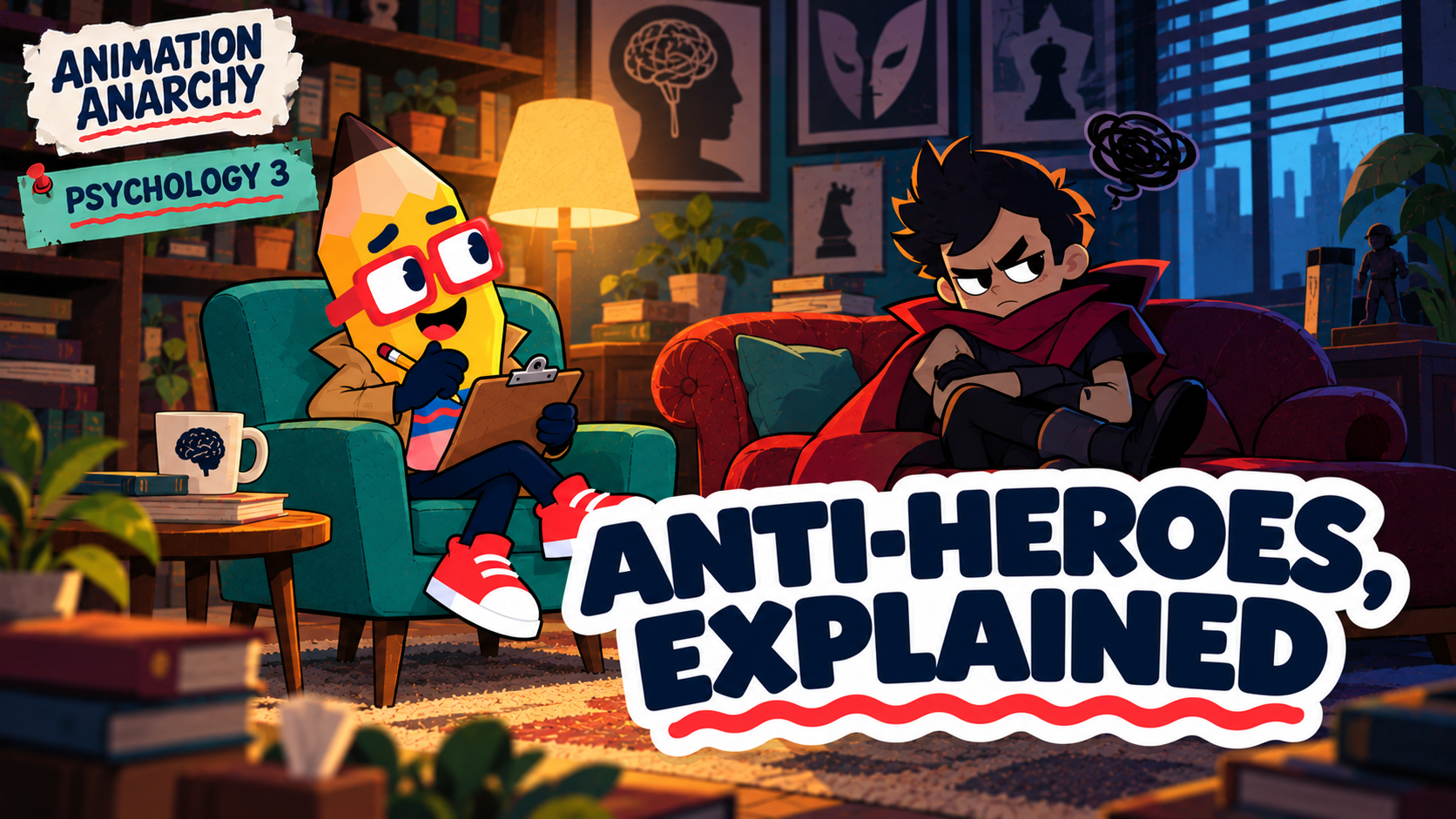
The Psychology of Animated Characters, Part 3
Anti-heroes are the rule-breakers. They save the day, complain the whole time, and might pocket your wallet on the way out. We love them because they skip the speeches and still, somewhere deep down, do the right thing.
Psychologist Lawrence Kohlberg studied how people develop their sense of right and wrong. He described stages, roughly:
Stage one, self-interest: "What's in it for me?"
Stage two, rules and approval: "What will people think?"
Stage three, principles: "What's actually right, even if nobody's watching?"
Anti-heroes start at stage one. Their whole story is the climb.
Type 1: The reluctant rescuer
Examples: Flynn Rider, Danny Phantom.
Flynn starts Tangled as a thief whose only goal is money. He helps Rapunzel because she has his satchel. By the end, he gives up everything to set her free. That's Kohlberg's whole ladder in one movie.
The joke: He'd save your life and then ask if you're going to finish those fries.
Type 2: The "you made me do this" anti-hero
Examples: Megamind, Shego, Gru.
These characters aren't evil. They're tired. They go through the same five stages every time somebody asks them to help: denial, annoyance, bargaining, doing it anyway, and secretly enjoying it. I go through those exact stages when someone asks me to help them move.
Gru is the classic. He adopts three girls as part of a heist, and they turn him into a dad. He didn't choose to be good. Good snuck up on him.
Type 3: The fighter with a code
Examples: Wolverine, Samurai Jack.
These heroes solve almost everything with a fight. They're grumpy, they work alone and they're terrible at talking about feelings. But they have a strict personal code, and they never break it.
The lesson: A code is what separates a fighter from a bully. That's Kohlberg's stage three, even if it comes with claws.
Type 4: The revenge seeker who finds something better
Examples: Prince Zuko, the Grinch, Hiro Hamada.
Each of these characters starts with one narrow goal. Zuko wants to capture the Avatar to win back his honor. The Grinch wants to ruin Christmas. Hiro, in Big Hero 6, wants revenge on the man he blames for his brother's death.
Then something better gets in the way. Zuko finds an uncle who believes in him. The Grinch hears Whoville singing anyway. Hiro remembers who his brother really was and chooses to protect people instead.
The joke: Zuko spent three seasons of Avatar chasing a 12-year-old across the world. That's commitment. Misplaced, but commitment.
The big lesson: anti-heroes show us growth in fast-forward
We like anti-heroes because they start where a lot of us start: a little selfish, a little grumpy, and mostly looking out for ourselves. Then we get to watch them climb. Every anti-hero story is a promise that people can change.
Your turn
Who's your favorite anti-hero, and what made them change? Tell me in the comments. Part 4 flips it: villains who might have a point.
New episodes drop on YouTube first. Subscribe to Mr. Bray Labs so you never miss one.
