
The Psychology of Cartoon Heroes (Part 2)
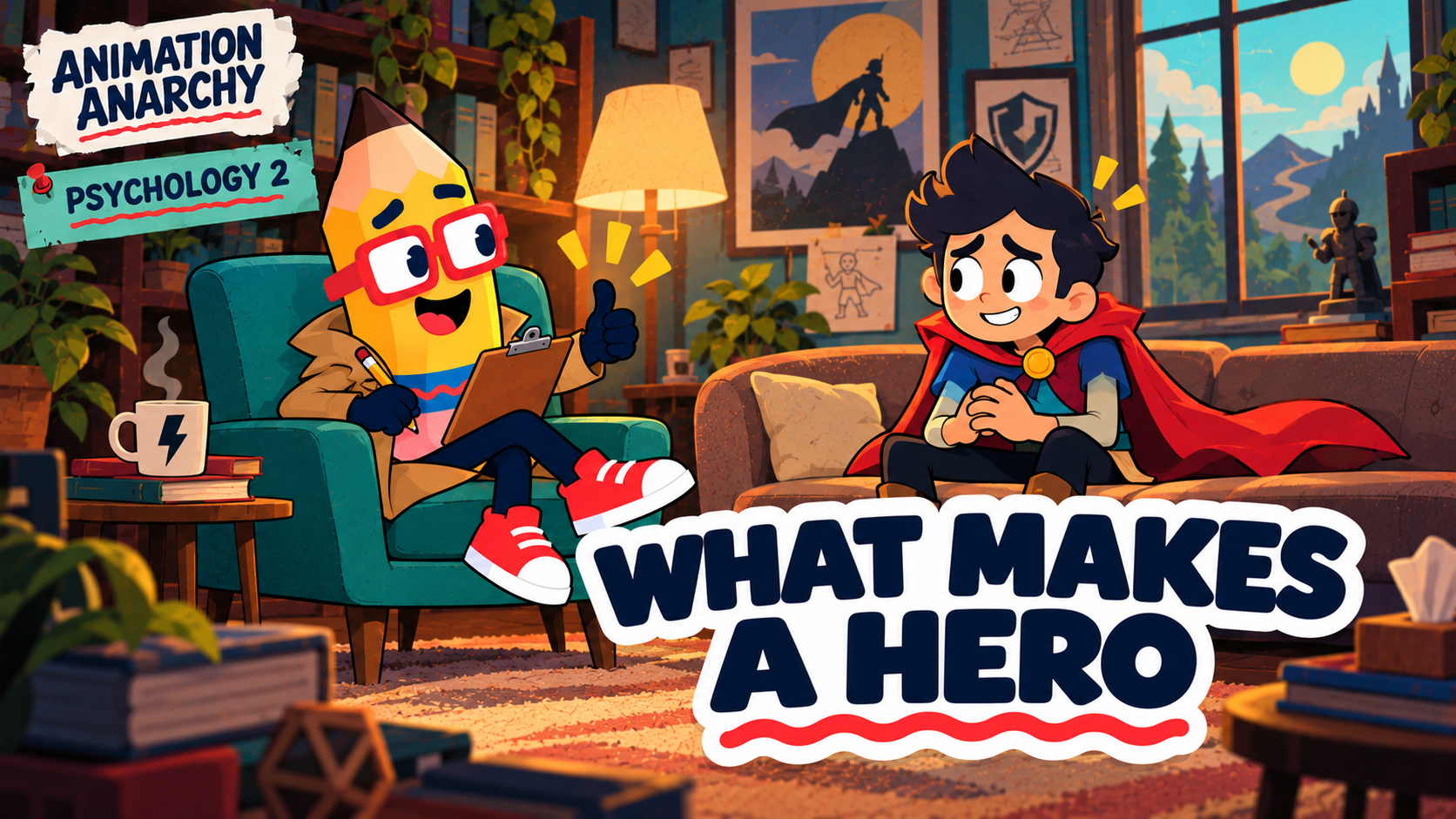
The Psychology of Animated Characters, Part 2
Last time we put villains on the couch. Today it's the heroes' turn, and honestly, they're a mess too.
Heroes skip sleep, get mentors killed off, and get handed destinies they never asked for. So why do we root for them? Because the best heroes show us something researchers have studied for decades: how people grow.
Type 1: The Chosen One
Examples: Aang, Moana, Ash Ketchum.
The idea: Mythologist Joseph Campbell noticed that hero stories around the world follow a similar path, which he called the hero's journey. The hero gets a call to adventure, often refuses it at first, meets a mentor, faces trials and comes home changed.
Aang literally runs away from his destiny and ends up frozen in an iceberg for a hundred years. That's the most dramatic "refusal of the call" in cartoon history.
The joke: Ash has been ten years old for over twenty-five years. Nobody in his world questions this. I have questions.
Type 2: The one who can't stop
Examples: Batman, Samurai Jack, Spider-Man.
The idea: These heroes have a mission so strong it takes over their whole life. Psychologists would call it a sense of purpose, and purpose is good for people. But these heroes show what happens when purpose leaves no room for rest.
Samurai Jack spends fifty years chasing one bad guy. Spider-Man keeps a terrible job and is always late. Batman could probably fix Gotham faster by funding schools and libraries, but instead he chose to punch clowns.
The lesson: Even heroes need a day off. Especially heroes.
Type 3: The no-powers hero
Examples: Sokka, Mulan, Shaggy.
The idea: Albert Bandura (yes, him again) studied self-efficacy: your belief that you can handle a challenge. Self-efficacy grows from small wins. These characters have no magic, no powers and no destiny. They just keep trying, and every small win makes them braver.
Sokka is the funniest example. He's the only member of his team with no bending powers, and he becomes the strategist who wins battles with his brain. Mulan defeats an army with one well-aimed firework.
The joke: Meanwhile, I have lost fights with a peanut butter jar and a customer service chatbot.
Type 4: The "too happy to fail" hero
Examples: Goku, Patrick Star, SpongeBob.
The idea: These characters charge into danger with total confidence, mostly because they don't understand the danger. But they're also showing something real: optimism and a playful attitude help people bounce back. They fail constantly and stay cheerful anyway.
The joke: They might not be the sharpest crayons in the box, but they seem to be having more fun than anyone else in it.
The big lesson: heroes grow
Psychologist Carol Dweck calls it a growth mindset: the belief that you can get better through effort. Almost every great cartoon hero starts out bad at something. Aang can't master earthbending. Mulan can't climb the pole. Sokka can't win a fight. Then they practice.
That's the real superpower. Not being chosen. Getting better.
Your turn
Which hero do you relate to most: the Chosen One, the workaholic, the no-powers fighter, or the happy one? Tell me in the comments. Part 3 is all about anti-heroes.
New episodes drop on YouTube first. Subscribe to Mr. Bray Labs so you never miss one.
