
The Psychology of Cartoon Villains (Part 1)
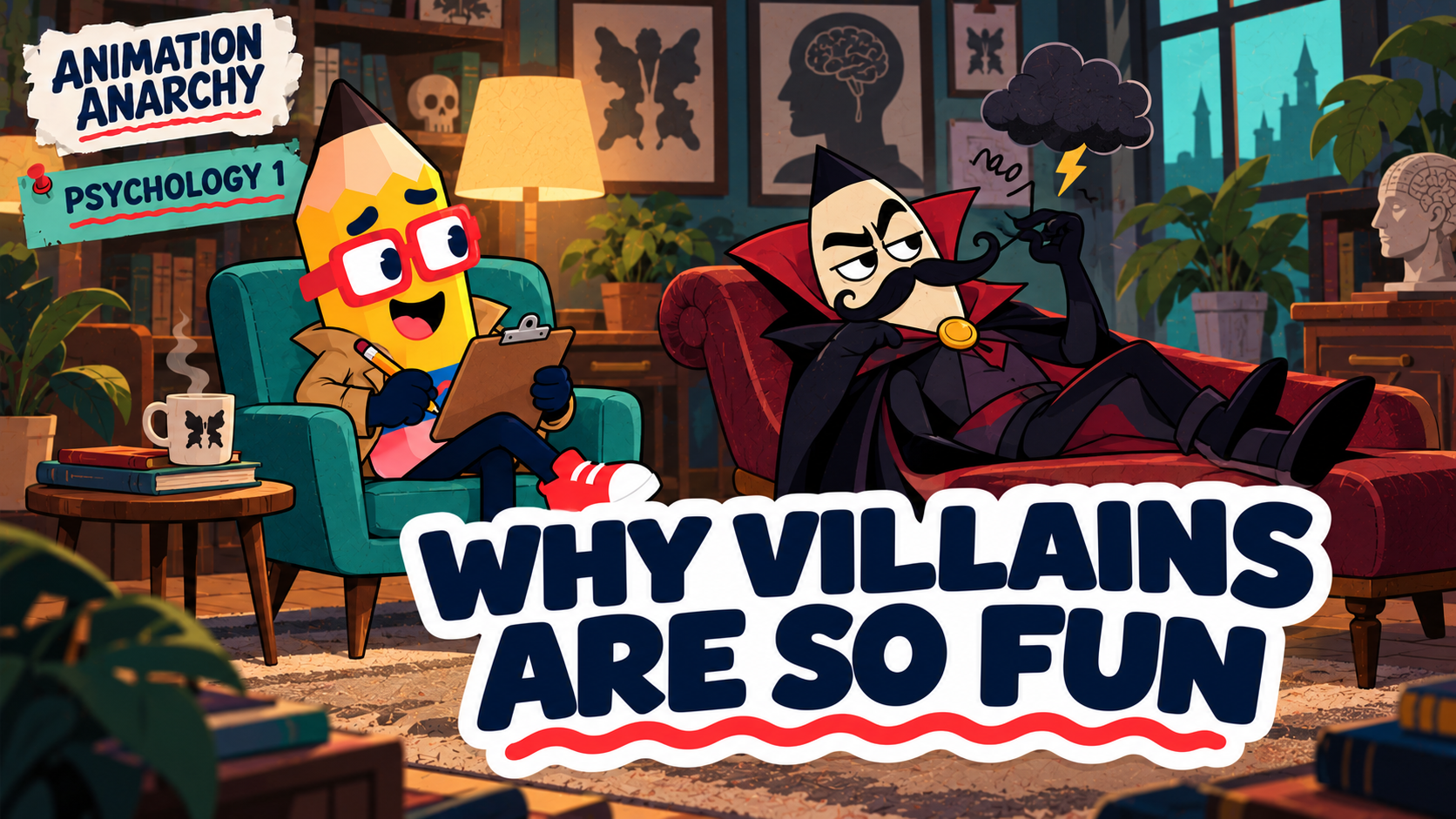
The Psychology of Animated Characters, Part 1
I have a doctorate in educational psychology, and I've spent an embarrassing amount of it thinking about cartoon villains.
Here's what I've learned: almost no villain thinks they're the bad guy. Scar thinks he deserves the throne. Mr. Krabs thinks he's a smart businessman. The best villains have reasons, and the reasons are what make them scary.
Psychologist Albert Bandura had a name for how people talk themselves into doing bad things: moral disengagement. It's a set of mental tricks that let someone do something wrong while still feeling like a good person. Cartoon villains use every one of them. Let's sort them.
Type 1: The "I deserve this" villain
Examples: Scar, Jafar, Dr. Doom.
The trick: Moral justification. They convince themselves their cause is so important that the rules don't apply. Scar believes he's the smarter brother, so the throne should be his. Jafar thinks he's the only one clever enough to run Agrabah. Doom thinks the whole world would be better if he ran it.
The pattern: monologue, a plan with too many steps, defeat by a teenager, dramatic exit.
The joke: In real life, these guys would run a podcast about leadership and never let anyone else talk.
Type 2: The chaos villain
Examples: Bill Cipher, HIM from The Powerpuff Girls, the Joker.
The trick: Displacement of responsibility. "It's just a game." "I'm just having fun." Chaos villains make the harm somebody else's problem. Bill Cipher treats people like pieces on a board.
Why they work: They're scary because they don't want anything we understand. No throne, no money. Just chaos.
The joke: This is the person who takes the last slice of pizza, then asks, "Was somebody saving that?"
Type 3: The villain with a sad backstory
Examples: Magneto, Prince Zuko (before his redemption), Mr. Freeze.
The trick: Advantageous comparison. "What I'm doing isn't as bad as what was done to me." Magneto's pain is real and his history is heartbreaking, and that's exactly why his choices are so dangerous. He compares his actions to what was done to his people, and his own actions start to look small to him.
Why they work: You understand them. Sometimes you even agree with them for a second. That's the point. The best tragic villains are one good decision away from being heroes, which is exactly what happens to Zuko.
Type 4: The money villain
Examples: Mr. Krabs (on his worst days), Lex Luthor, Scrooge McDuck (early on).
The trick: Euphemistic labeling. Bad things get nicer names. It's not "underpaying SpongeBob," it's "smart business." It's not "greed," it's "ambition."
Why they work: They're the most realistic villains on the list. You've probably met one.
The big lesson: villains are made, not born
Bandura's point wasn't that bad people are a different species. It was that ordinary people can talk themselves into harmful things one small step at a time. That's why the best cartoon villains feel real. They're warnings.
The good news: the same research says the opposite is true too. People can talk themselves into good things, one small step at a time. That's a redemption arc. Ask Zuko.
Your turn
Which villain do you secretly understand a little too well? Tell me in the comments. Part 2 puts the heroes on the couch.
New episodes drop on YouTube first. Subscribe to Mr. Bray Labs so you never miss one.
